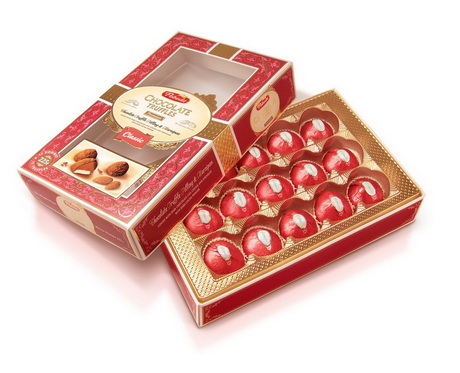
This Wednesday, Pobeda, owned by Vitaliy Muraviyov and his wife, Olga, opened a confectionery factory in the Latvian city of Ventspils. Pobeda Confectionery, the first Russian chocolate production facility in the European Union, can produce 10,000 tons per year. More than 7 million euros were invested in the purchase of equipment. The spouses plan to see their investments paying off in 2-3 years. The company already exports its chocolate and candy products to 20 countries from its factory in Yegorievsk. However, the volumes are small: in 2015, Pobeda exported 2,600 tons of chocolate and candy worth $ 6.5 million (approximately 15% of their revenues in rubles).
Until 2012, the Muraviyovs sent a container of chocolate per month (22-24 tons) to the United States. Pobeda’s chocolate was sold in Russian and ethnic stores, for example, in many stores in Brighton Beach and Brooklyn. But they wanted more — to get into the American retail. For this purpose, the couple launched their factory in the Baltic State and reorganized the export channel.
Sweeten the Americans
To establish contacts with American distributors, Pobeda participated in international exhibitions. The first was Sweet & Snacks Expo in 2012, which cost $ 20,000. Now the company makes about 10 such outings a year. Another $ 20,000 were paid for exhibition booths. To get to their first show, the company had to join the NCA (National Confectioners Association) and pay membership fees.
“Americans love big chocolate bars. Therefore, in addition to 100-g bars, we supply the ones, weighing from 130 to 150 g. Specially for the Americans, we made 40-45-g chocolate bars with peanut butter — people in the United States are accustomed to this product since childhood. Candy are delivered only to Russian shops — the same product range as in Russia,” told Mr Muraviyov. To develop a product range for the Americans, the company had to invite consultants.
Pobeda Sugar-Free Chocolate with stevia instead of sugar caught the Americans’ eye. In the United States, they added stevia to drinks but did not figure it out for chocolate. Such chocolate suits those who keep a diet. At that exhibition, the spouses found the first partner — a California company, which now buys a container of Pobeda Chocolate every month. The Russians offered a price by 5% lower than their competitors. Now Pobeda supplies Russian chocolate to Catholic churches that organize charitable bazaars in aid to orphanages.
Thanks to exhibitions, Pobeda found two more distributors in the United States. One of them delivers Pobeda Chocolate to kosher shops (Pobeda had to obtain a certificate at the Russian Kashrut), the other one — the small retail.
The confectioners from Russia had to overcome distrust of inspection bodies. “Russia’s Rospotrebnadzor is a minor trouble, compared with inspections, held by American officials. Our containers were checked by border guards, then — by inspectors from the Federal Drug Administration (FDA), followed by other supervising bodies,” told Mr Muraviyov.
Migrating sweets
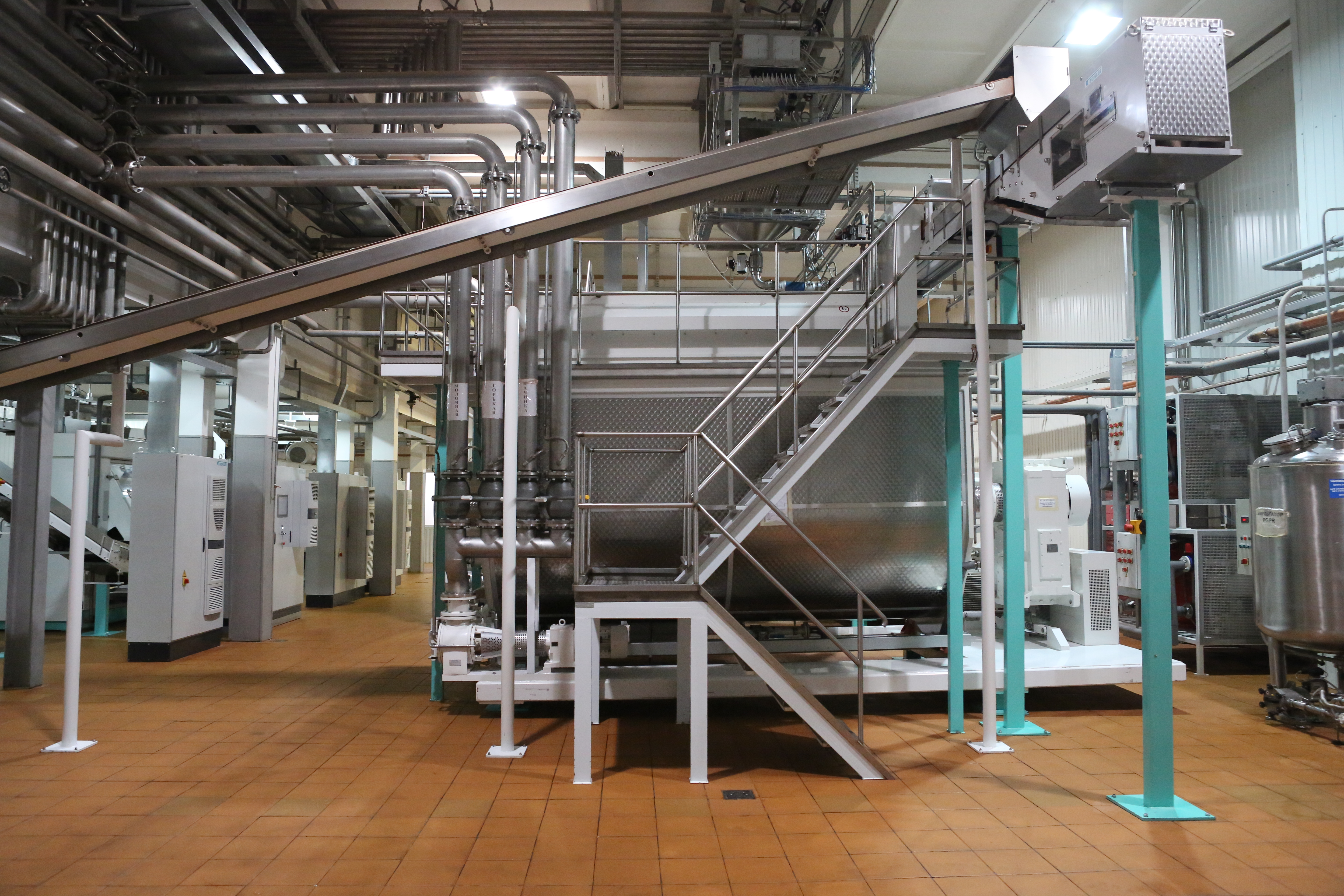
In 2014, the spouses rented a factory at a free port in Ventspils and embarked on its refurbishment. They searched for production specialists themselves: posted ads on Latvian websites for job seekers. Now they are mostly staffed: the factory employs 75 people, 10 of them — engineers and technologists. Most of them are locals. One of those who oversaw the launch, the son of the Muraviyovs, 27-year-old Andrei, — in charge of technical equipment. It is planned to produce 120 items in Ventspils (in Russia — more than 250). 60 types of Pobeda chocolate and candy will be adapted to the tastes and peculiarities of different countries; by the end of this year, the number of adapted products should reach 80-90. The production will begin with tiled chocolate — it enjoys the highest demand. The output during the first stage is approximately 1,000 tons per month.
Pobeda also counts on a partial pay-off of investments in the factory (from 30% to 45%) under a program of the Latvian Investment and Development Agency. The construction of a confectionery factory in the Baltic States is a very sensible step, according to Leonid Bulyga, CEO of Dilyaver, a distributor of Russian food products abroad. “Especially if the factory serves markets of the Baltic States, which traditionally consume a lot of Russian food products — about 25% of the assortment in grocery stores are Russian goods,” he added.
Important accomplishment: the company has recently entered into a contract on the supply of four types of chocolate bars to Wal-Mart’s Brazilian (again — thanks to an acquaintance at the exhibition).
To supply 10,000 tons of Russian chocolate to foreign markets is quite feasible, if you make a quote 2 times lower than competitors, according to Maria Kolbina, an analyst at VTB Capital. The factory’s pricing on the US market is not so important as compared with the marketing and advertising budget, Mr Bulyga says, “The US Market is very hard, there are imported products from China and Europe. It is unclear, whether foreign countries (excluding the Baltic States) can eat the declared amount of chocolate products — 10,000 tons.”
The launch of the factory in Ventspils is an additional trump card, the co-owner believes: “Depending on commodity prices, economic and even political situations, you can sell the same product to customers, manufactured at a more profitable production site. For example, earlier commodity prices were lower in the EU, now — in Russia. Egypt has long been waiting for our supplies, and the factory in Ventspils will help make them more profitable: between Latvia and Egypt, there are no protective duties,” told Mr Muraviyov.

Comments (0)
Twitter
Facebook
Pinterest
E-mail