A unique industrial complex for deep processing of industrial hemp seeds has been put into operation in the Tula region. The complex at the Uzlovaya SEZ is the largest in Europe and the only one in Russia. At full capacity, it will process more than 20,000 tons of hemp seeds per year. The project is aimed at import substitution. Investments in the new production exceeded one billion rubles. Investors’ interest in technical hemp is justified by the fact that this commercial niche is vacant. Russia is just trying to join the international trend — in Europe and North America, agriculture has long been actively cultivated hemp and produced goods from it.
Hemp in the Tula region is a historical agricultural raw material. It is even depicted on the coat of arms of Yepifan, the capital of Kulikovo Field. Local merchants, whose history is now so carefully collected by scientists of the Kulikovo Field Museum Reserve, benefited from selling hemp oil and ropes. However, today those hemp ropes can only be seen in some products — for example, chuni or fabrics woven from hemp fibers, as well as from flax. Hemp was also used to make gunpowder.
Back in the 1930s, a million hectares of hemp were planted in Russia. Today, according to Andrey Belyashov, the founder of Makosh, there are just 16,000. The return of this crop to Russian fields began around 1991. From 2020, it is allowed to cultivate varieties with a mass fraction of tetrahydrocannabinol of no more than 0.1 percent for industrial purposes. Russia’s drug control watchdog Gosnarkokontrol, by the way, encourages their cultivation, as there is a re-pollination with wild neighbors, reducing the harmfulness of the latter. In addition, technical hemp has been officially included in the state register of plants that ensure the country's food security since 2022.
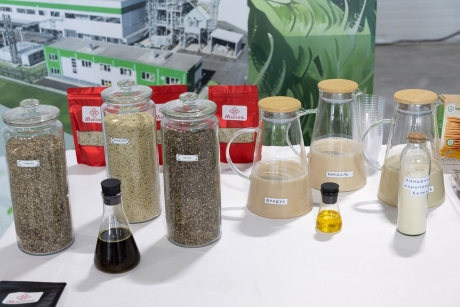
More than 35,000 different products are made from hemp, from a variety of confectionery products, cosmetics, animal feed to fabrics and plastics with unique properties. Hemp protein is an excellent source of protein, which includes all eight essential amino acids, as well as useful unsaturated fats, fiber and minerals (zinc, iron, calcium, manganese, potassium, phosphorus, etc.). It also contains chlorophyll, a plant analog of hemoglobin, useful for hematopoiesis. Hemp proteins are simpler and are better absorbed than soy because they are very similar to the proteins of the human body. Hemp fats also have a positive effect on the immune system. It is simple to cultivate help, so it eliminates the use of GMOs. Since hemp kernels are logically nuts, they have become very popular with confectioners (they easily replace almonds). By the way, the protein content in these nuts is 32 percent, which is more than in chicken and beef meat. At the same time, hemp is not an allergen. And in cosmetics, hemp oil is valued on a par with shea butter and argon oil. Today, hemp products are already quite widely represented in trade on the shelves of chain stores dedicated to healthy lifestyle. There are not many companies in Russia that process hemp seeds. The largest are Medal in Chelyabinsk and Konopel from Nizhny Novgorod, but even there the production capacity is up to 20 tons per month. Now Makosh from the Tula region has joined them. It offers a large output, as well as deep processing.
“Prepare, clean, grind, squeeze — this is the beginning of processing. The second stage includes enzymatic hydrolysis and extraction. This is cooking hemp kernels with enzymes: the result is vegetable hemp milk, which can be added to any taste, as well as hemp protein concentrate and cosmetic hemp oil. This technology is completely Russian, developed by the company’s specialists in cooperation with Russian scientists,” explained Andrey Belyashov. 80 tons of seeds produce only 30 tons of pure hemp kernels.
More than 35,000 products are made from hemp, from confectionery, cosmetics, animal feed to fabrics and plastics.
Production is highly automated. There are just 30 people for jobs that require human participation. The company’s equipment is 90 percent Russian-made. The company has several patents for inventions, employees participated in these developments.
“A special economic regime has been created in the Uzlovaya SEZ, which is attractive to investors. Today we are opening a new production facility in the region’s agribusiness, a very interesting project, unusual for the Tula region and Russia as a whole. The cultivation and processing of oilseeds is currently developing rapidly, as they have great potential for application and use. Thousands of products can be made from them, from the food industry and cosmetology to building materials,” said Dmitry Milyaev, Governor of the Tula region.
Currently such oilseed crops are not grown in the region. Hopefully, the new processing plant would contribute to the cultivation of this crop in the Tula region. For this reason, many local farmers were invited to the opening ceremony to see and evaluate the development opportunities of their farms in this area.

Comments (0)
Twitter
Facebook
Pinterest
E-mail